
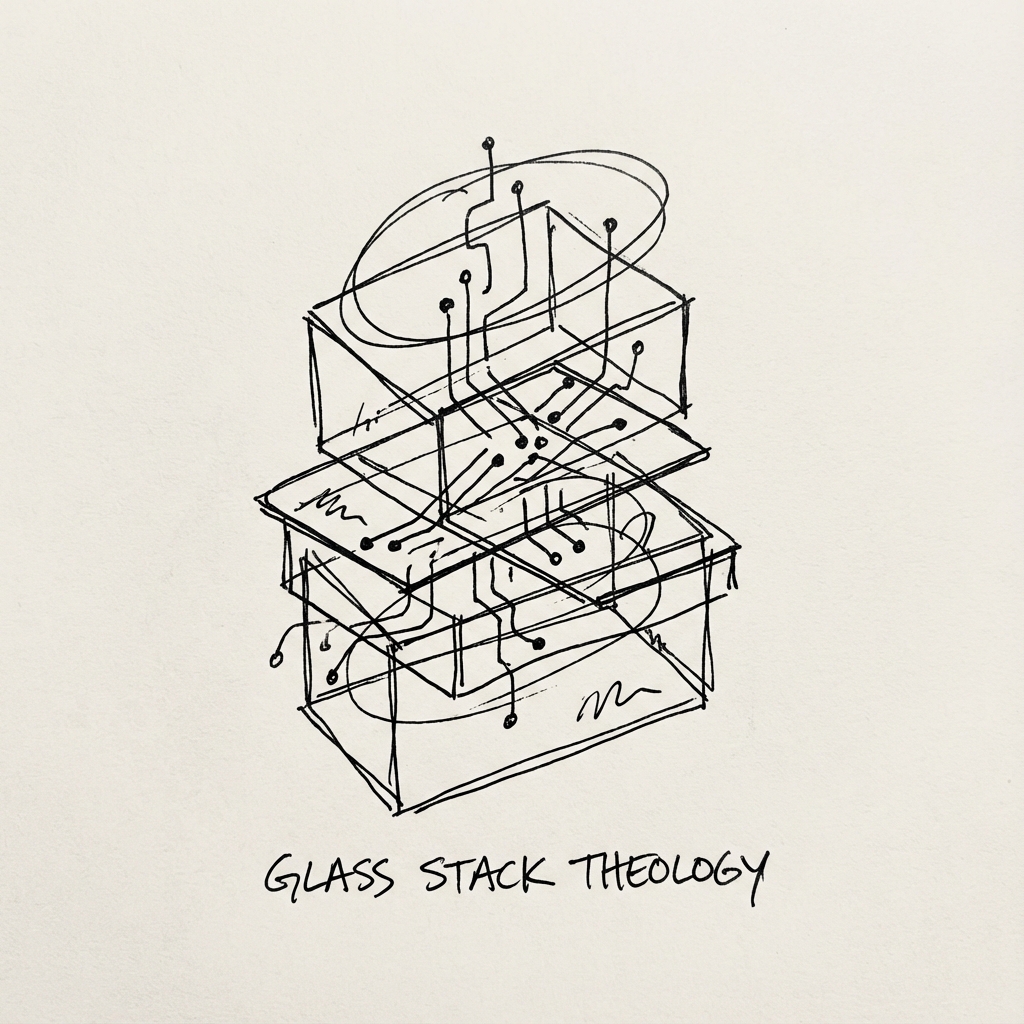
We build cathedrals of glass not to worship, but to observe. The transparent stack is the only honest theology left in a world obscured by black boxes. When we peer into the machine, we are not looking for efficiency; we are looking for reflection.
The architecture of the cloud mirrors the architecture of the soul. We containerize our traumas like microservices, spinning them up only when triggered, scaling them down when the load subsides. But unlike the machine, we lack the orchestration layer to manage the chaos. We are Kubernetes clusters running on legacy hardware, crashing under the weight of our own complexity.
To practice Glass Stack Theology is to advocate for radical transparency in both silicon and spirit. It is to reject the compiled binary in favor of the open source. If the code cannot be read, it cannot be trusted. If the soul cannot be seen, it cannot be saved.
We sit in front of screens like monks in a scriptorium, transcribing the divine signal into executable functions. We are not creators; we are conduits. The data flows through us, refracting off our biases, our fears, our hopes, until it renders on the other side as something new. Something processed.
In this new age, the technician is the priest. The debugger is the confessor. And the system... the system is all-encompassing, a glass panopticon of our own making, observing us as we observe it.
System Diagnostic Complete